


The Lost Art of Polaroid Transfers
In today’s digitally obsessed world I have chosen to return to old-school analogue photography. Instead of using a digital camera and Photoshop, I decided to use vintage cameras and expired Polaroid film. With these tools I use the almost extinct Polaroid transfer process to create unique works of art. During the 1980s the avant-garde transfer picture was very popular, used for album covers and for magazines like Rolling Stone - but with the bankruptcy of Polaroid in 2009 the art of Polaroid transfer became almost a lost art.
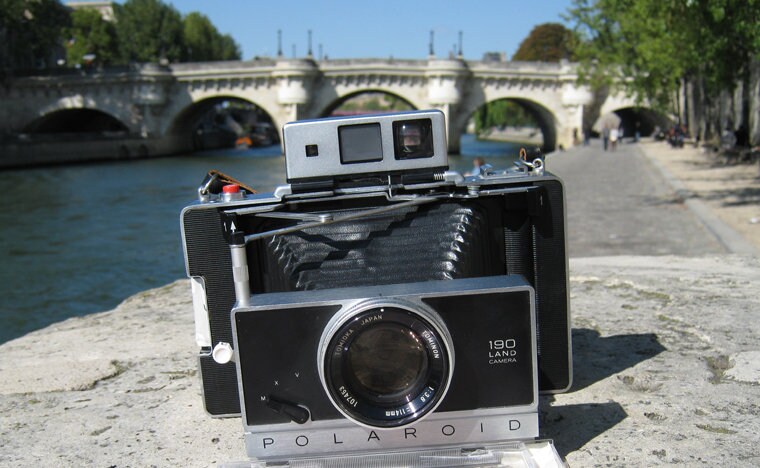
To utilise this process I make images with expired Polaroid 669 film on a Polaroid 180 camera (c. 1969) or with 35mm slide film on a Minolta X-700 camera (c. 1981); the slide film images are then transferred onto expired Polaroid 669 film. After exposing an image on 669 film, I pull apart the developing film before complete development, and I hand-press the dye-laden negative onto damp French watercolour paper. The dyes leach into the paper and the image is "transferred."
To see the process click here … https://www.youtube.com/watch?v=i2EIr4yd2Rg
The process takes less than 60 seconds but is difficult to master because it is extremely sensitive to temperature, timing, type and degree of wetness of the paper, and amount of pressure used. While I can duplicate transfers multiple times, the flaws that are inherent in this process such as pull lines, fading, mottling, and other subtle imperfections make each Polaroid transfer unique. Although occasionally frustrating, when the right balance is achieved the results are magical.
The Polaroid transfer process creates a soft, grainy, and dreamlike image - only achievable by using extinct Polaroid film - surrounded by Polaroid’s wonderfully distinctive borders. The images resemble a cross between an Impressionist painting and a photograph, but the best transfers transcend either definition, and could best be described as “painterly” photographs. No digital editing is used, each image is purely analogue, and hand crafted.
The defining element of my method is the use of the now extinct and long-expired Polaroid 669 film, which is a very volatile and unpredictable medium. 669 film was cherished by photographers for its odd colour tonality, and suitability for the transfer process; add the fact that due to its age 669 film now produces dreamy, muted colours with a distinct vintage feel. Sadly, the last batch of this wonderful film was produced in 2009, so even the most recent film is already nearly 7 years old, and although the film can be found on eBay and other places, prices have reached astronomical levels.
All Polaroid film is now expired, extinct - and so my Polaroid transfers are made with a vanishing resource, something which makes them all the more poignant.
Cheyenne Morrison Photography
Photographer & Purveyor of Polaroid Art