
Emoji pain scales don't work for everyone
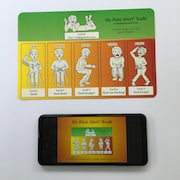
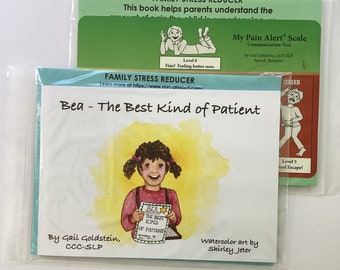
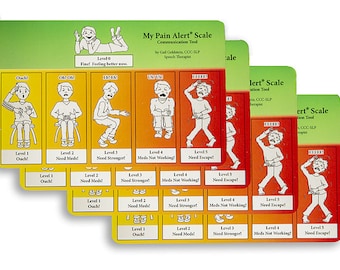
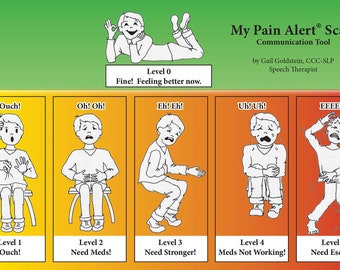
I am a Speech Language Pathologist who worked in many settings. I discovered individuals who said their pain was a "10," because the directions of the standard 1-10 scale were long and confusing and they needed help. I helped prepare autistic adults for surgery. Pain care was the event for which there were no training materials. When a toddler in her family was expected to respond to Faces scale directions, Gail was motivated to create a pain scale ALL people could use with support. Apparently, some doctors have been persuaded that the cartoon emojis of Faces-type pain scales are useful for communication-challenged people. Some healthcare guidelines still suggest parents start children with acetaminophen for any pain experienced. The story tool this SLP created changed the home life of that toddler. Once he understood that he was able to get relief by communicating with MPAS, he told Mom as soon as the pain started, so I created them with the help of artists and friends. My Pain Alert Scale(R), with little stories explaining and practicing each pain level works for families. It is ideal to use every day at home to make sure your loved one (a little child, a stroke victim, or a parent with dementia) is okay. Other families trying the original book reported their children bought-in to MPAS use quickly. They also reported less stress for the child and the family with subsequent pain events. Bea- the Best Kind of Patient print book is the revised version of the original for the youngest patients, introducing the process with a little girl's story.
The word side of the card was added for adults with chronic pain or memory issues. My Pain Alert Scale was added to the communication board of a large hospital shortly after COVID resulted in handicapped patients being admitted without access to their caregivers.
