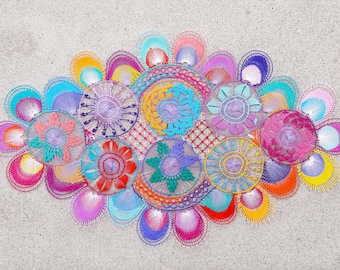
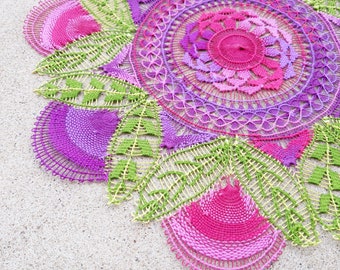

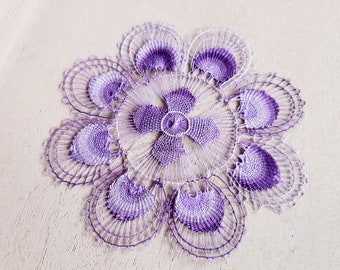

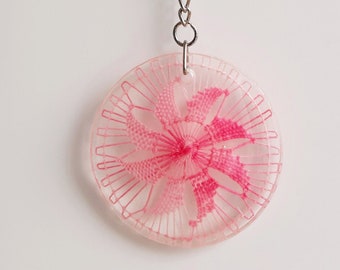
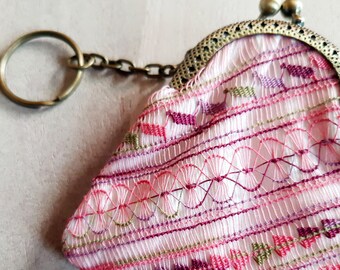
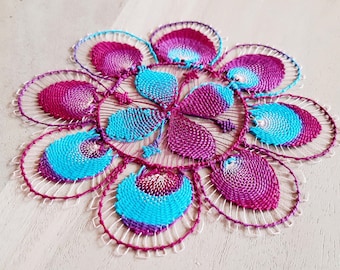
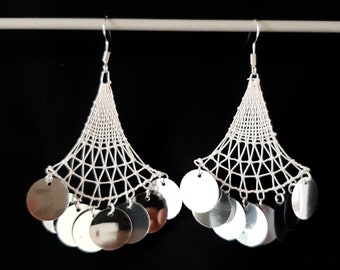
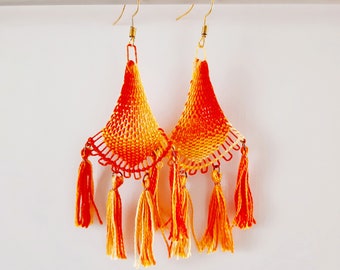
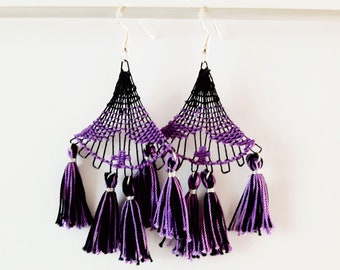
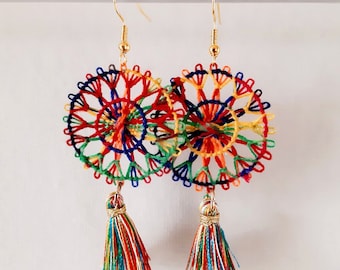
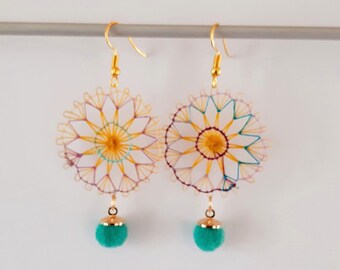
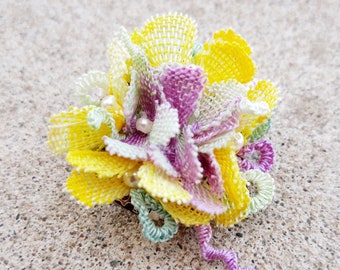
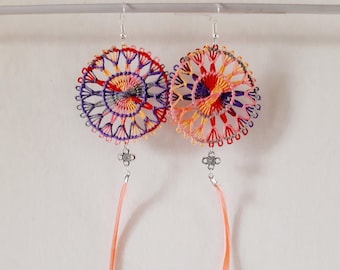
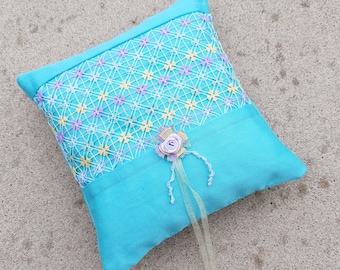
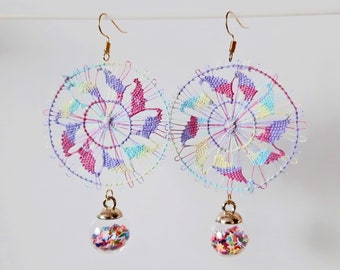
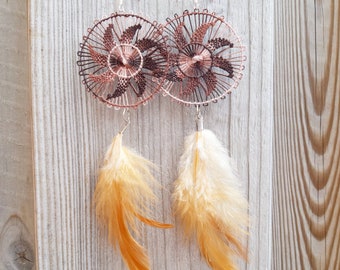

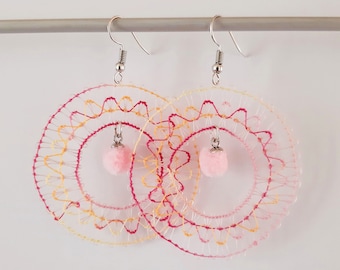
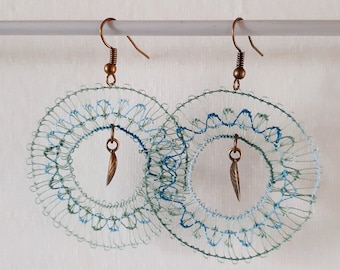





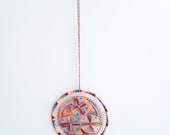

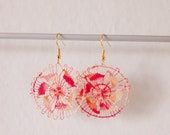
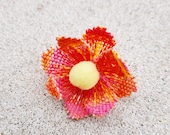
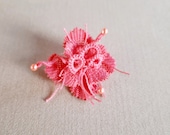
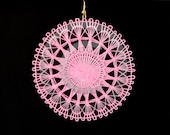
Paraguayan Ñandutí Lace Made In Holland
Prepare to be captivated by the enchanting world of ñandutí!
From the moment I discovered this remarkable art form, I was instantly mesmerized. In my homeland, information about ñandutí was scarce, leaving me both frustrated and intrigued. This sparked an unwavering determination within me, transforming my quest to master this technique into an absolute obsession.
Countless hours of tireless studying, extensive research, and dedicated practice have been poured into my journey, culminating in a proud accomplishment—I am now able to create my own breathtaking ñandutí.
Allow me to share my passion and expertise with you as we embark on a remarkable voyage through the intricate patterns and delicate craftsmanship of ñandutí. Together, let's explore the rich heritage and timeless beauty of this cherished art form.
Warmest regards,
Liz
Commissions:
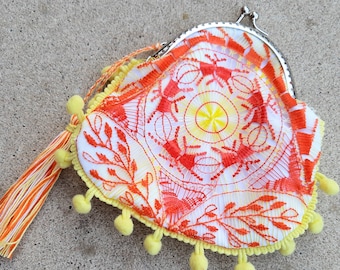
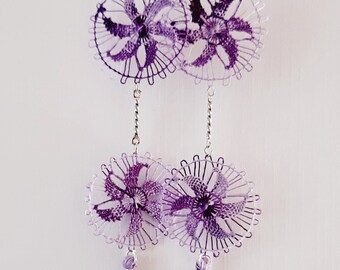
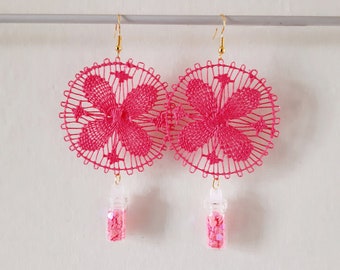
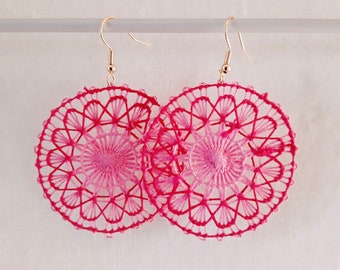
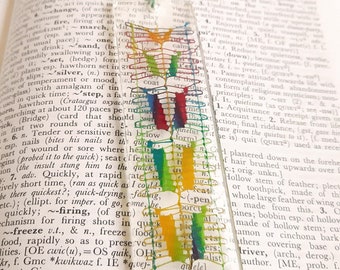
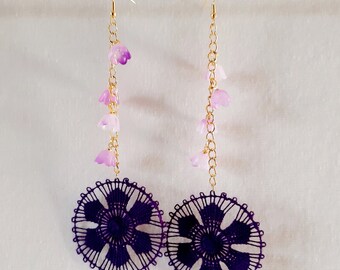
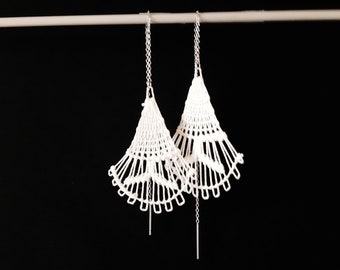
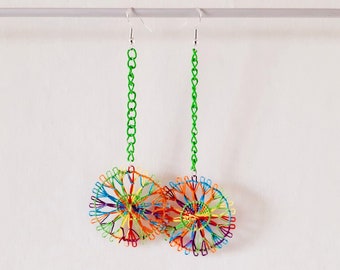
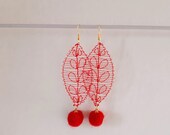
I had the pleasure of collaborating with a talented Fashion Design & Textiles student in Amsterdam. Together, we worked on her graduation assignment, where I crafted a stunning elongated ñandutí that she skillfully transformed into a stylish leather belt. Additionally, I created a collection of earrings for her, including a captivating pair of asymmetrical leaf-shaped earrings measuring 17 and 23 cm in length.
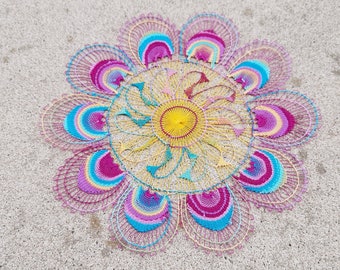
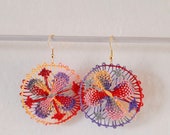
Another exciting project involved collaborating with an American artist who specializes in creating mesmerizing beaded paintings. Inspired by her devotion to the Bahá'í Faith, I crafted two exquisite ñandutís and a pair of earrings that beautifully reflected the theme of her religion. The Bahá'í Faith is symbolized by a radiant 9-pointed star, which served as the focal point for the earrings, while the ñandutís featured nine pointed setting suns. These artistic pieces were seamlessly integrated into her remarkable artworks.
Since May 2022, one of my exceptional creations has been proudly showcased at the esteemed Museo Textil de Oaxaca AC in Oaxaca de Juárez. This captivating artwork holds a prominent place within the interactive exhibition titled "Fibras de Abya Yala," allowing visitors to engage with its profound beauty and cultural significance.
The technique of the ñandutí.
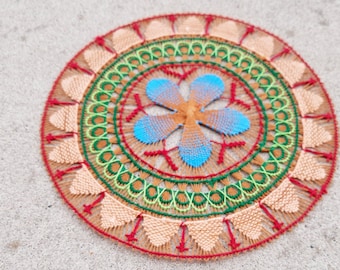
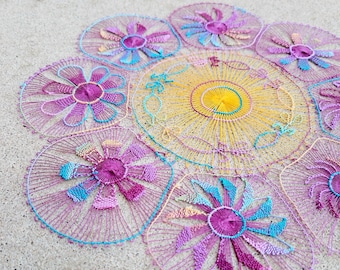
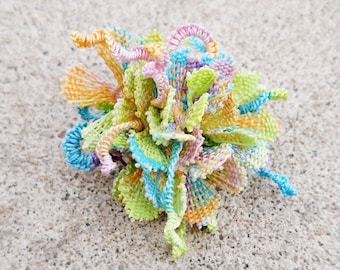
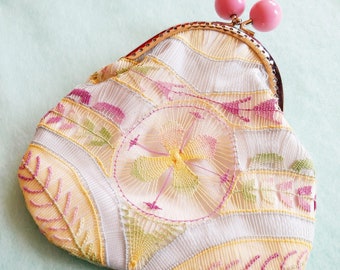
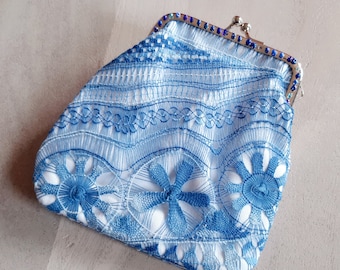
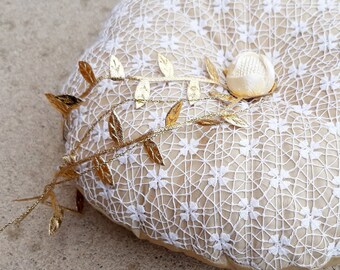
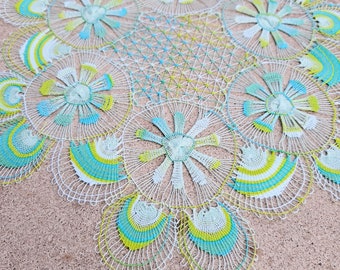
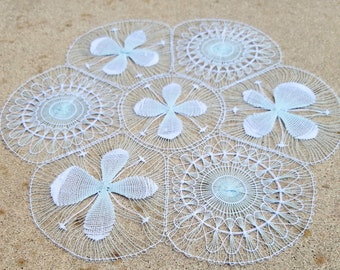
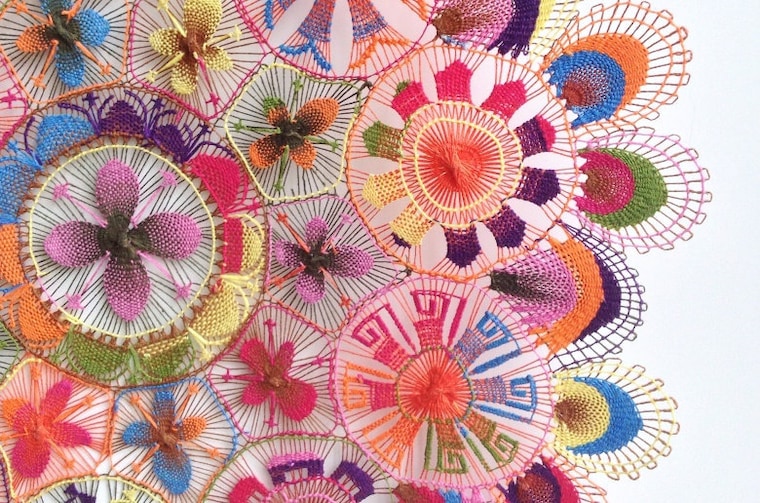
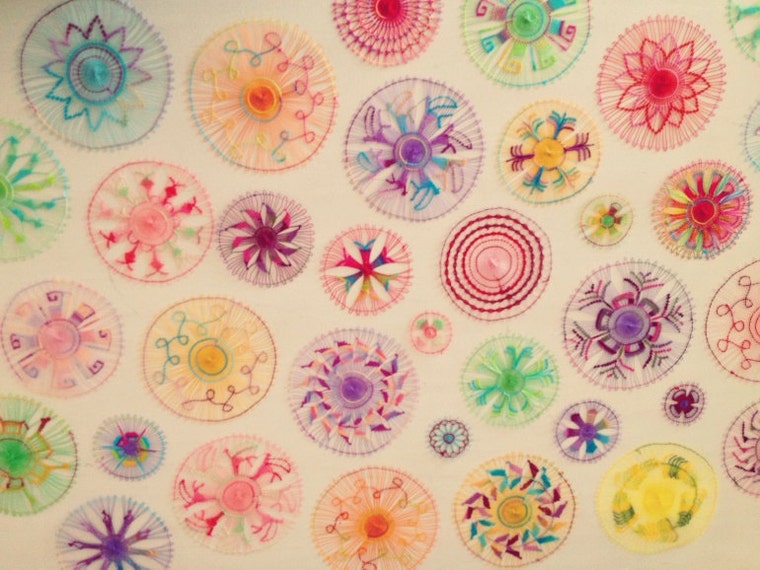
Ñandutí, woven with needle and thread, features a distinctive matrix of squares or circles, approximately 2 inches across, with a radiating warp. A suitable quadrangular frame is used, with its sides tied together at the corners. The fabric is stretched on the frame using twine to support the needlework.
The process of making ñandutí involves three stages. First, the design is traced onto the fabric using a pencil and a template placed underneath. Then, the lacemaker builds the warp of each disc using a needle, creating stitches along the outline of the circle. Around 120 to 150 rays per disc are stretched and secured with darning stitches.
The center of the disc, called the "apyte," serves as the starting point for creating floral or star motifs. For other motifs, the warp is divided into three parts, and concentric circles are made at the end of the first third. This process, known as "filleting," uses a knot stitch to tie threads together.
On the radiated warp, the lacemaker laces decorative motifs, known as "dechados," using the darning and knot stitches. Once a motif is complete, one or two concentric circles are made at the edge of the disc for a reinforced finish. The remaining discs are made in the same manner.
After completing the needle stage, the frame is flipped over, and the scissors stage begins. Using a pair of scissors, the lacemaker cuts the fabric between the stitches supporting each disc's rays, removing any excess fabric following the circle's outline.
